
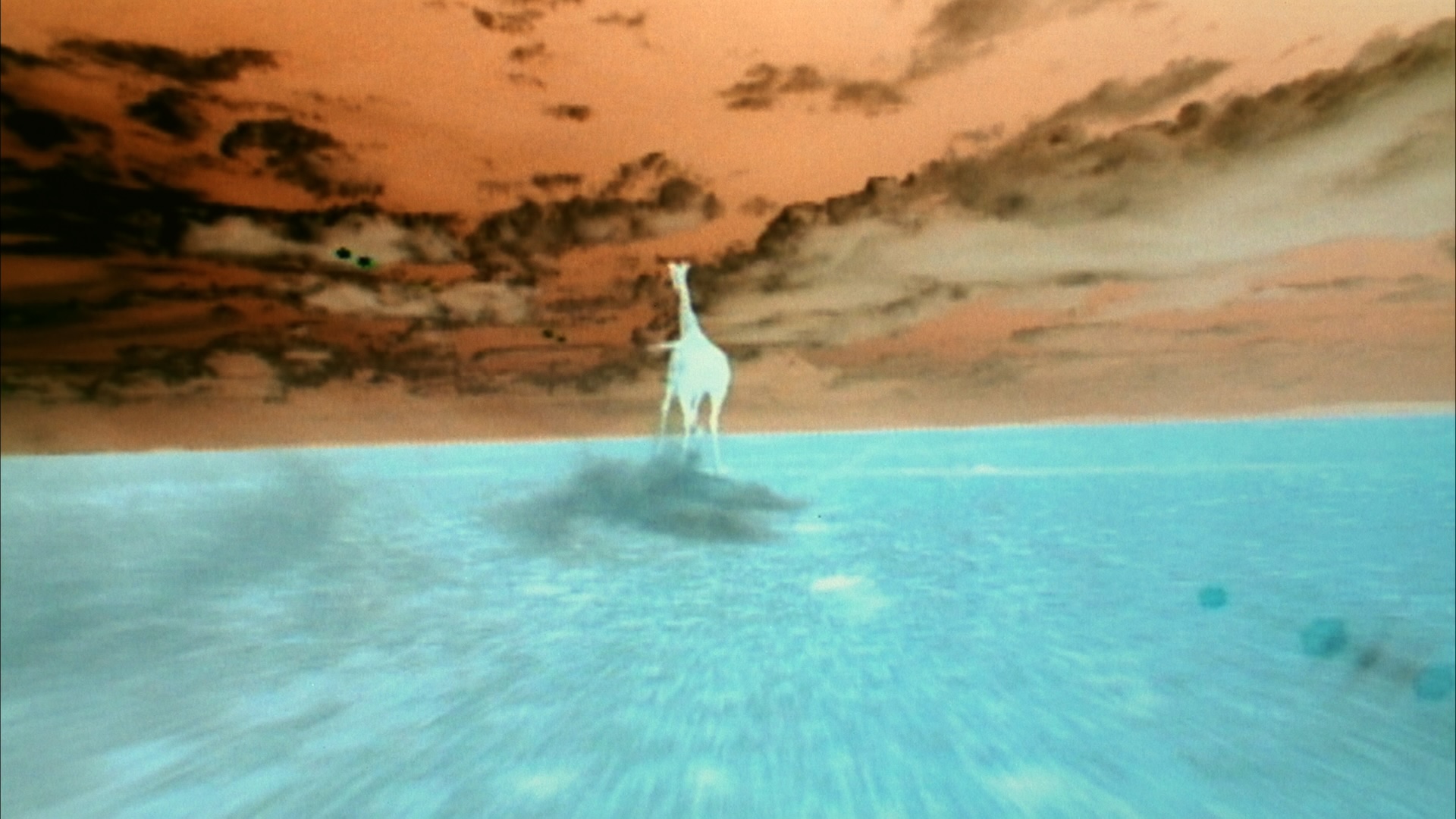
Twenty years after Koyaanisqatsi sent its camera into the desert, Reggio stays indoors: there is no location photography here, only archival and stock footage, surveillance imagery and early-2000s CGI, digitally reworked until history itself looks manufactured.
Where the first two films argued through landscape, Naqoyqatsi argues through image — stockpiled news footage, sporting events, courtrooms, and battlefields, layered and slowed until the distinction between document and simulation collapses. Reggio's target is the image economy itself: a world where the picture of a thing has replaced the thing, and conflict has become so normalized it no longer needs a battlefield to register as war.
Philip Glass returns for his third and final score, this time built around a solo cello part performed by Yo-Yo Ma. Steven Soderbergh came aboard as executive producer, and the film premiered at Telluride and Venice in 2002, closing a trilogy that took twenty years, three continents, and one uncompromising vision to complete.
